
Virality is the “holy grail” of digital marketing.
When a campaign goes viral, it reaches levels of reach that would once have required a multimillion-dollar budget. Agencies dream of it because it means mass attention, organic reach, and enormous impact in a short amount of time.
Genuine virality, however, is rare and elusive: it depends on a complex mix of cultural timing, emotional resonance, and sometimes plain luck. Below, we look at why brands chase virality, why it’s so hard to achieve, and recent 2025 examples, from controversial campaigns to celebrated hits, to compare their results.
Brands’ Obsession with Virality
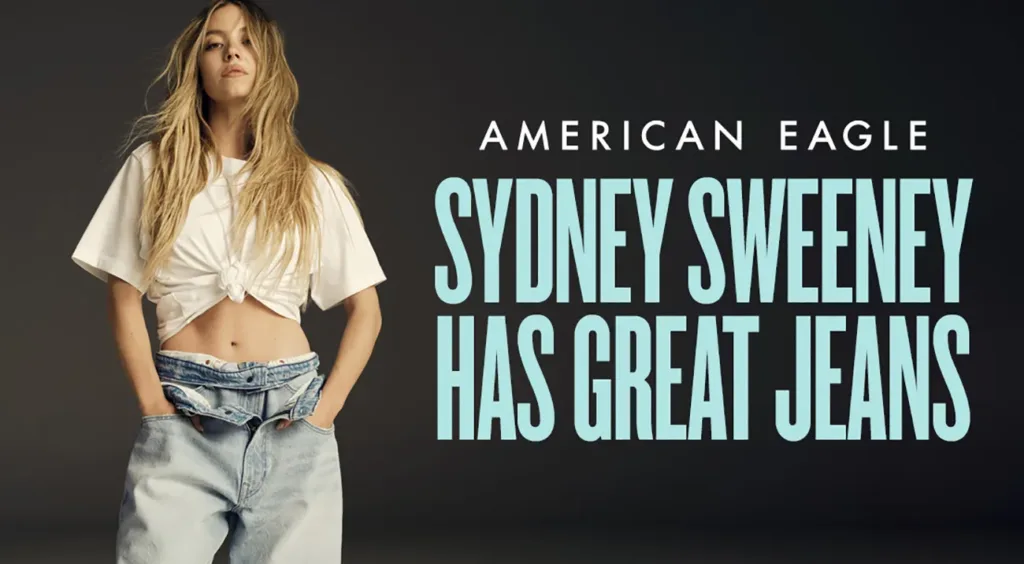
Why do advertising agencies crave virality? Mainly because it multiplies reach without multiplying spend. A viral campaign generates enormous impressions, press mentions, and social conversation, all without extra media cost. American Eagle’s recent fall campaign with actress Sydney Sweeney, for example, generated 40 billion impressions on social media in just a few weeks.
These campaigns also tend to attract new customers: American Eagle gained more than 700,000 new customers after the uproar over Sweeney. The brand reported quarterly revenue of $1.28 billion, driven in part by that campaign. When an ad “blows up” online, the return on investment in terms of brand awareness can be enormous.
Another reason is that virality delivers social proof: if “everyone” is talking about your campaign, the message sinks deeper into popular culture. Agencies chase that coveted moment when a slogan or video turns into a meme and crosses over into traditional media. In the first half of 2025 we saw how even controversy fed that kind of fame: “there’s no such thing as bad publicity.”
- American Eagle’s campaign proved that a well-handled controversy can send a company’s stock soaring (its shares rose 33% after the campaign).
- Brands crave that snowball effect that only virality can deliver: maximum media noise for minimal incremental spend.
Why Is Virality So Rare?
Getting content to go viral is extraordinarily difficult.
Social platforms are saturated with information and public attention is volatile. Even well-produced campaigns can go unnoticed if they don’t connect emotionally or offer something different. What goes viral often doesn’t follow a predictable formula: it depends on chance factors or the mood of the audience. Chasing virality can also mean taking creative risks that not every brand is willing to take. As experts warn, “if you play it too safe, you’re invisible.” Campaigns that break the mold, on the other hand, have a better shot at standing out, but they run the risk of backlash.
Another reason virality is so scarce is algorithmic unpredictability: platforms like TikTok or Twitter amplify content in opaque ways. You can invest in a clever idea, but whether the algorithm decides to show it to the masses is partly a matter of chance. That makes virality a hard target to plan for. Even campaigns with “viral” ingredients (celebrities, humor, emotion) don’t always take off. In short, virality is coveted but scarce because it combines the art of reading the culture of the moment with the luck of hitting the exact bullseye of public conversation.
Let’s look at how two very different approaches achieved, or tried to achieve, that status in 2025.
Controversy as a Viral Strategy: American Eagle and e.l.f. Beauty
People walk past a massive American Eagle billboard featuring Sydney Sweeney in New York. The “Sydney Sweeney Has Great Jeans” campaign sparked controversy while also attracting hundreds of thousands of new customers.
Some brands have bet on calculated controversy to spark virality. A textbook case is American Eagle’s fall 2025 campaign starring Sydney Sweeney. The slogan played on the double meaning of “Sydney Sweeney Has Great Jeans” (jeans/genes) and set off fury among audiences: many read it as a eugenics-tinged message, given that a white, blonde, blue-eyed actress was cast as the face of “great genes.”
Social media lit up, calling the ad racist, “propaganda reminiscent of the National Socialist party of the 1940s,” and sexist for its male gaze. It even became a political talking point, used as ammunition in so-called cancel culture, with even President Donald Trump weighing in to publicly praise Sweeney.
Paradoxically, all of that outrage amplified the campaign exponentially. American Eagle itself acknowledged on an earnings call that it saw “unprecedented customer acquisition” thanks to the uproar. In numbers, the company added over 700,000 new customers and its advertising generated 40 billion impressions on social media. Far from pulling the ad, CMO Craig Brommers said the brand was “not going anywhere” with Sweeney and would keep adding chapters to the campaign.
On the stock market, American Eagle’s share price jumped more than 30% after capitalizing on all that attention. The message for the industry was clear: controversy, handled well, can turn a reputational stumble into massive free publicity.
Another example is cosmetics brand e.l.f. Beauty, known for its clever campaigns aimed at Gen Z. In August 2025 it launched the “e.l.f.ino & Schmarnes” campaign, a mock legal-infomercial parody starring comedian Matt Rife and drag queen Heidi N. Closet. The tone was humorous, using satire to call out the “cosmetic crimes” of high prices. As soon as the video dropped, though, online fury erupted: users recalled that Rife had made offensive jokes about domestic violence in his stand-up routine, which clashed with e.l.f.’s pro-women values. The company hadn’t anticipated that connection and faced a viral boycott, with customers demanding an explanation. e.l.f. reacted fast: within just three days it pulled the ad and apologized in a statement, admitting it had “missed the mark” and that it was listening to its community.
Even so, the campaign achieved its share of virality before it was pulled: it racked up millions of views and made e.l.f. a trending topic for days. Interestingly, the real-world impact turned out to be limited. The brand reported that its promotional event in New York (a mock beauty law firm set up at the Oculus) drew more than 1,100 visitors lining up from 6am to redeem products, despite all the negative noise online. Analysts noted that a Twitter scandal doesn’t necessarily translate into lost sales: plenty of people get outraged online but “still keep buying American Eagle jeans or e.l.f. mascara anyway.”
In fact, e.l.f. suffered no lasting damage, and its chief marketing officer, Kory Marchisotto, said the brand would keep leaning into irreverent humor because “our community loves it.” This “rage-bait” strategy (provoking anger to win virality) carries risk, but both American Eagle and e.l.f. came out ahead: heavy media attention, a boost in sales or traffic, and a strong foothold with younger audiences. As one commentator summed it up, today “most marketing leaders would rather get noticed and apologize later than go unnoticed.”
Positive, Scarce Virality: Gap’s Success with Katseye
In contrast to the controversies above, other 2025 viral campaigns succeeded by appealing to positive emotion and inclusion, proving that you don’t always need to anger the public to get noticed. A standout example was Gap’s fall campaign “Better in Denim,” starring the global girl group Katseye. The campaign revived Gap’s classic DNA (musical, joyful, for everyone) with a modern, Gen Z-ready twist: it featured Katseye’s six members, from diverse backgrounds (the Philippines, South Korea, Switzerland, the US), dancing a vibrant routine to the nostalgic beat of Kelis’s “Milkshake.”
The result was a fun, inclusive, feel-good ad that won audiences over. In under a week it became the most viral campaign in Gap’s history, shattering all of its engagement records. It drew overwhelmingly positive reactions online, with users praising the cast’s diversity and the empowering vibe of the message (“stronger together,” the tagline read).
The numbers behind “Better in Denim” back up its viral status: it became Gap’s most-liked video ever on TikTok and Instagram, surpassing in three days the combined view count of its previous four campaigns. The brand hit engagement levels it had never seen before: on Instagram, the video tripled its previous view record and performed 100 times better than its 2025 average. The campaign generated $1.7 million in earned media value (EMV) within days, well beyond another successful Gap campaign that same year, which had earned $1.1 million in EMV.
Beyond the numbers, “Better in Denim” connected with culture: fans and creators recreated the choreography on TikTok, and a dance studio in New York even started offering classes to teach it. The campaign “felt good,” in the words of Fabiola Torres, Gap’s global CMO, because amid so much negative noise online, people were grateful for a message that was easy, joyful, and optimistic. “The moment you put positive, easy-to-connect-with content into the world, people gravitate toward it,” she explained. The bet on diversity also strengthened its impact: many favorably compared Gap’s choice of Katseye, an emerging, multicultural group, to American Eagle’s choice of Sydney Sweeney, seeing Gap’s pick as more aligned with today’s values.
Ultimately, Gap achieved virality and applause while avoiding controversy, staying true to its nearly 30-year-old approach of blending fashion with music and pop culture. This confirms that virality can also come from positive values, when content genuinely resonates with the public.
Comparing Viral Wins: Controversy vs. Positivity
The American Eagle/e.l.f. cases versus Gap illustrate two very different paths to virality, both successful, but success measured in different ways. Were the controversial campaigns just as successful as celebratory ones like Gap’s?
It depends on which metrics you value:
Reach and business impact. In terms of sales and new customers, American Eagle can claim an immediate win. Despite the initial backlash, its campaign with Sweeney didn’t hurt sales; on the contrary, it drove traffic and lifted the brand’s forecasts. The company even raised its guidance thanks to the momentum generated by its denim marketing and its collaboration with Travis Kelce. e.l.f. Cosmetics, though it had to pull its ad, got its message (“expensive makeup is a crime”) widely discussed, reinforcing its positioning as an affordable brand. It’s true that e.l.f. faced criticism and a minor stock dip, with shares falling about 2.7% after the controversy, but there was no mass exodus of customers. In the end, the attention generated can be seen as free advertising for the brand (many people learned about e.l.f. and its philosophy because of the scandal). By comparison, Gap may not have seen as instantly measurable a sales spike, since its campaign aimed more at reviving the brand’s relevance than at selling a specific product. Even so, Gap reported that “Better in Denim” racked up 400 million views within days and reignited interest among consumers who had been tuned out of the brand for years. That renewed enthusiasm is expected to translate into sales over the medium term (Gap posted its first revenue increase in years in 2024, and campaigns like this aim to sustain that trend). Both strategies delivered successful results: American Eagle and e.l.f. with immediate gains in awareness and customers, at the cost of some outrage, and Gap with a massive boost in engagement and brand image that lays the groundwork for its recovery.
Reputation and public sentiment. This is where the paths diverge. American Eagle’s and e.l.f.’s campaigns got eyes on them, yes, but alongside divisive sentiment. Part of the public was upset, accusing AE of racism or e.l.f. of insensitivity, while another part supported or shrugged off the controversy. This kind of virality polarizes: it can attract curious new customers, but it also risks the loyalty of some existing ones. Luckily for AE, the outraged voices seemed to be a minority; it even won fans among “anti-woke” segments who applauded the end of political correctness. Gap’s campaign, by contrast, generated overwhelmingly positive sentiment. The conversation around Katseye was one of celebration: praise for Gap for representing modern diversity and recapturing its cool spirit of years past. That strengthens brand love with no side effects. In the long run, virality built on positive values is likely more sustainable: an inclusive, joyful ad rarely needs an apology, while “edgy” brands have to carefully calibrate how far to stretch the cord of provocation.
Creativity and risk. The final contrast lies in creative philosophy. American Eagle and e.l.f. chose to take risks and break the mold, which, to be fair, also deserves creative credit. They went for spicy humor, taboo topics, or attention-grabbing stunts to avoid going unnoticed. As one commentator put it, American Eagle did “whatever it took” to “win back attention on social media” after losing relevance. Gap, on the other hand, innovated without betraying its essence: it leaned on music and dance, a formula proven throughout its history, but gave it a modern, diverse twist. In terms of success, both approaches can achieve virality, but the cost of failure differs. If a controversial bet backfires, it can damage the brand (imagine if e.l.f.’s sales had actually dropped significantly, that would have been a serious misstep). A positive campaign that fails to go viral, on the other hand, at least leaves no negative aftermath, it simply passes without fanfare.
This year taught us that virality remains a coveted but unpredictable phenomenon. Agencies chase it because it equals cultural relevance, and in a saturated market, being part of the conversation is pure gold. Some, like American Eagle, proved that provoking the audience can deliver tangible business results (“there’s no such thing as bad publicity” seems to be their mantra).
Others, like Gap, showed that moving and uniting the public can also light the viral fuse, a slower fuse, perhaps, but one that burns longer. In the end, virality is scarce because it requires striking the right chord at exactly the right moment, whether that’s the chord of outrage or of nostalgic joy. This year’s most viral campaigns combined bold creativity with social intuition. And for brands, the lesson is clear: if you get people talking about you, for better or worse, you’ve already won half the battle.
The key is making sure that noise serves your long-term goals and values. Because a day of fury on Twitter passes quickly; winning over the audience’s heart, or their rejection, can last far longer.